Ask three sources what a home in Coquina Sands costs and you'll get three different answers, and none of them are wrong.
One tracker, pulling active listings in mid-March 2026, put the median list price at $3,785,000 with homes sitting an average of 167 days before going under contract. A separate dataset covering the trailing twelve months through April 2026 showed a median sale price of $1,700,000, down 7 percent from the year before, with condos taking an average of 178 days to sell against a 56-day national benchmark. Meanwhile, a newly constructed waterfront estate closed in May 2026 for $17,060,000, a new sales record for the neighborhood and one of the highest closings in Naples this year.
A $3.8 million median list price. A $1.7 million median sale price falling year over year. A $17 million record sale in the same stretch of months. If you're comparing Coquina Sands to the Moorings or Park Shore before you make an offer, this is the moment where most buyers assume someone got the math wrong. Nobody did. The numbers disagree because Coquina Sands is small enough that they're supposed to.
The Denominator Problem
Coquina Sands is roughly 0.33 square miles, sits west of US 41 between Old Naples and the Moorings, and is not gated. The total housing stock, single-family homes and condos combined, runs to a few hundred residences rather than a few thousand. At any given point in 2026, the number of active listings across the entire neighborhood has swung from as few as the teens to a little over fifty.
That matters because a "median" only means something when enough transactions feed it that outliers cancel out. In a market with 500 closings a month, one $17 million sale barely moves the needle. In Coquina Sands, where a handful of closings can define an entire quarter's data, that same sale can single-handedly pull the average toward the ceiling while the median, which ignores extremes by design, keeps drifting based on whatever mix of older cottages and new construction happened to change hands.
A median sale price is a photograph of the homes that changed hands during the period being measured. In a market this small, that photograph changes completely from one reporting period to the next.
This is also why average asking prices in Coquina Sands have been reported anywhere from roughly $10.1 million (measured in February 2026 across 51 active listings ranging from $360,000 to $50 million) down to a $3.1-to-$3.3 million range measured two months later against a completely different set of active listings. Both figures were accurate for the moment they were pulled. Neither one describes "the market." They describe whoever happened to be listed that week.
One Neighborhood, Two Very Different Housing Stocks
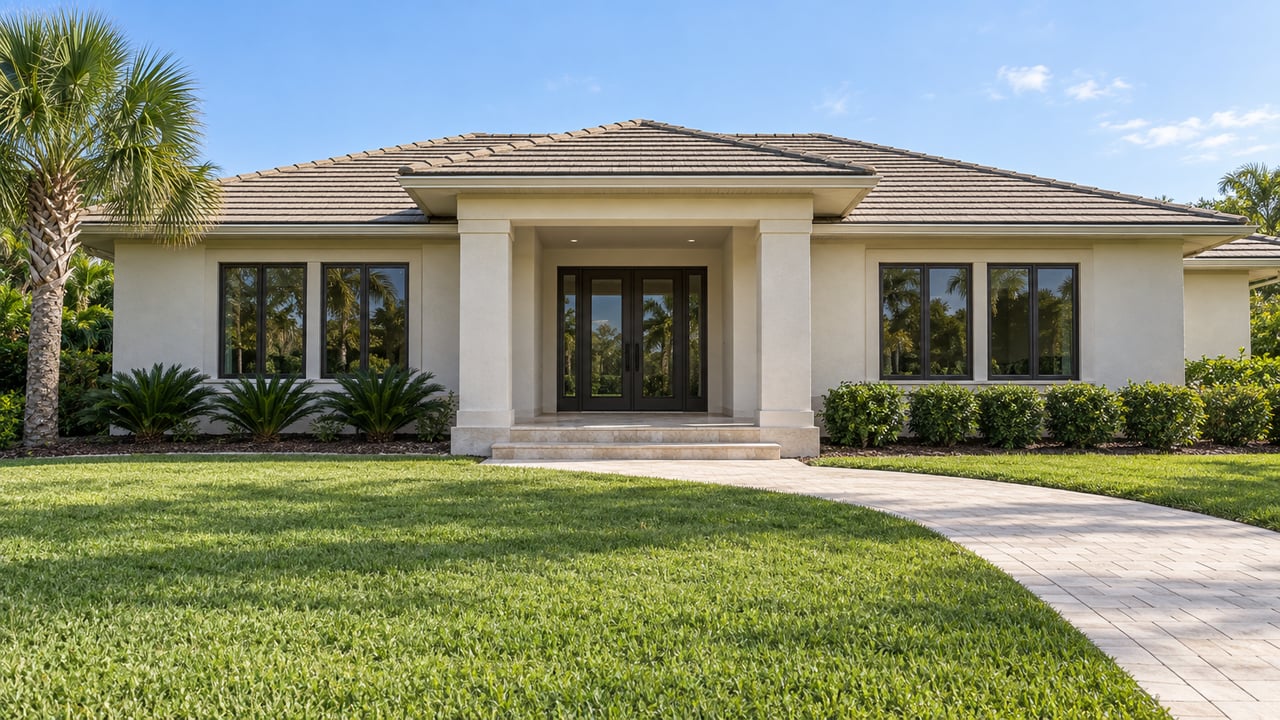
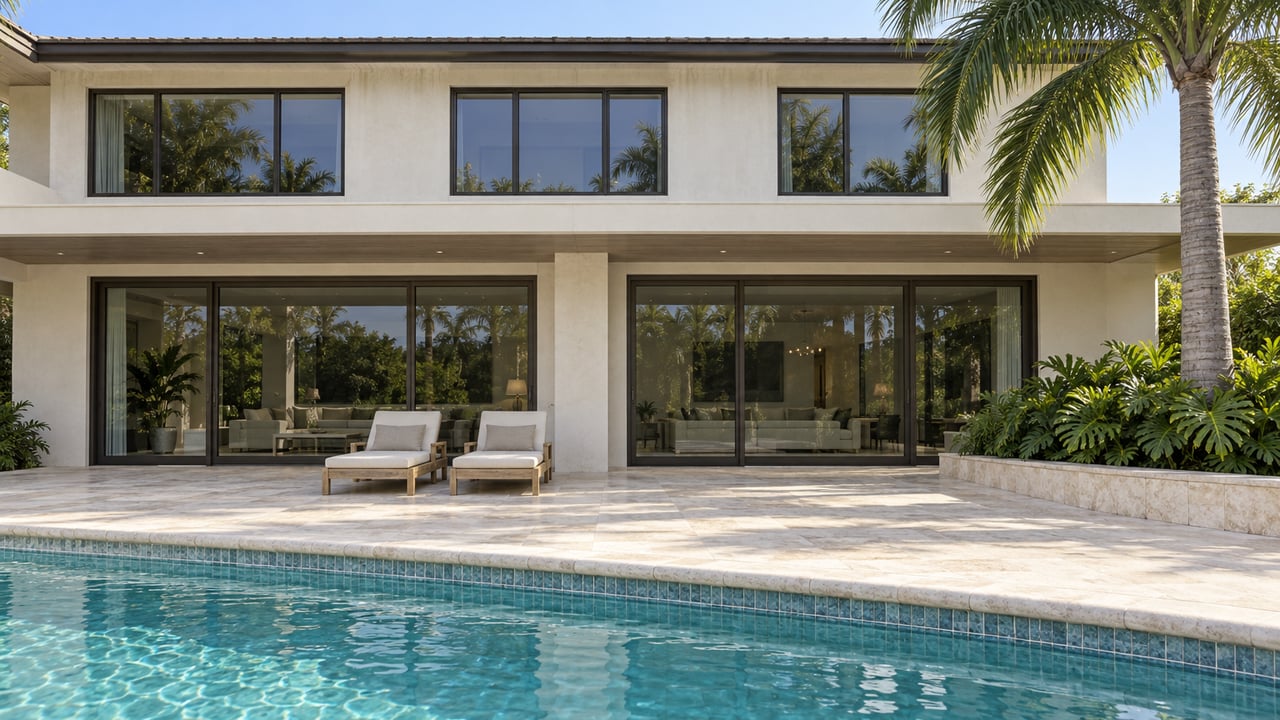
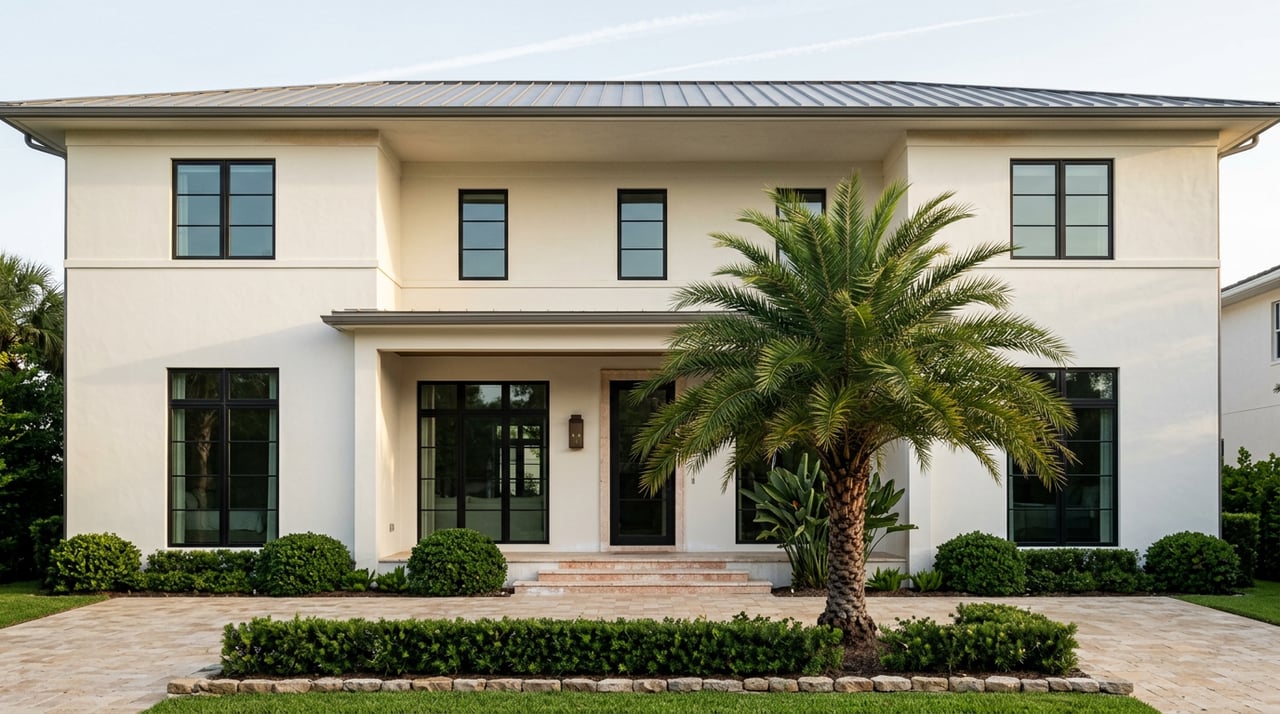
The other piece of the puzzle is what's actually sitting inside that small footprint. Coquina Sands was one of Naples' first platted residential neighborhoods, developed in the 1960s on the same grid system used in Old Naples, and its original cottages started around 1,400 square feet. Walk a few lots down and you'll find recent construction pushing toward 10,000 square feet, built on the same size homesites, sometimes on the same streets.
That's not a neighborhood in transition so much as a neighborhood running two markets in parallel. A 1960s cottage and a brand-new estate can sit on comparably sized lots and post wildly different price tags, and depending on which type happened to close in a given reporting period, the neighborhood-wide median will swing accordingly, with no change whatsoever in what either type of home is actually worth.
Price per square foot is a steadier read precisely because it strips out that mismatch. Two separate snapshots of the active market in 2026, taken about six weeks apart with different listing sets, landed at $2,130 and $1,981 per square foot respectively, a far tighter spread than the swings in median or average price over the same window. If you're trying to compare what your money buys in Coquina Sands versus the Moorings or Park Shore, price per square foot on genuinely comparable homes, similar size, similar lot, similar waterfront access, tells you far more than any neighborhood-wide average will.
What's Landing in the Same Small Footprint Over the Next Two Years
The other variable buyers should watch isn't a stat at all. It's supply, and it's arriving in a corridor too small to absorb it quietly.
- 2020 Gulf Shore: a 15-residence community taking shape at Charleston Square on Gulf Shore Boulevard North, with a sales gallery that opened around the start of 2026. Pricing starts near $6 million, with delivery estimated for 2028.
- 3300 Gulf Shore Blvd: 51 residences, with construction underway since January 2026 and delivery targeted for late 2027.
- Harbour House: 14 residences on the former Naples Harbour Club site, developed by Borelli Construction and designed by MHK Architecture, starting at $6.5 million with delivery expected in 2028.
Add those together and roughly 80 new luxury units are set to land in the Coquina Sands and Moorings stretch of Gulf Shore Boulevard over the next two years. Against a condo stock that currently numbers in the low hundreds, that's not a rounding error. It's a meaningful expansion of inventory in one of the tightest luxury corridors in Naples, and once those units start closing, they'll be large enough transactions to move the neighborhood's median and average all over again, the same way the $17 million sale did in May.
Reading the Corridor, Not Just the Block
Zoom out one level and the broader ZIP code covering Park Shore, the Moorings, and Coquina Sands has been running hot. Naples Area Board of Realtors data for that ZIP through May 2026 showed closed sales up 60.5 percent year over year, with the median sale price up 46.4 percent to $1,537,000. That's real demand, not noise. It just doesn't answer the narrower question of what a specific Coquina Sands home, on a specific street, at a specific size, is likely to sell for. The corridor tells you buyers are active. Only comparable-home data tells you what to offer.
For a buyer weighing Coquina Sands against a similarly positioned home in the Moorings or Park Shore, the practical takeaway is simple: ask for the actual comps, not the headline median. Ask what recently closed within the same size range, the same lot type, the same distance from the water. In a neighborhood this small, that's the only version of "market value" that holds up from one month to the next.
FAQ
If the median sale price is down 7 percent, does that mean Coquina Sands is cooling off? Not necessarily. A falling median in a market this thin can simply mean fewer large estate sales closed during that particular twelve-month window, not that comparable homes are worth less. The same neighborhood posted a record $17 million sale in May 2026.
Will the new condo construction lower prices once it delivers? It's too early to say. What's more likely, based on how new construction has historically affected pricing in the corridor, is that these projects reset the benchmark for what a new-build luxury condo commands, which can pull the neighborhood-wide average upward even if existing inventory holds steady.
How should I actually compare Coquina Sands to the Moorings or Park Shore? Match on size, lot type, and water access first, then compare price per square foot on those specific homes. Neighborhood-wide medians in any of these three communities can be skewed by a handful of transactions, so a direct, like-for-like comparison will tell you more than the top-line numbers on any listing site.
If you're weighing a purchase in Coquina Sands against the Moorings, Park Shore, or another stretch of the Naples waterfront and want the actual comps behind these numbers rather than the neighborhood-wide average, Susan Barreiro can walk you through what's genuinely comparable, and what isn't. Let's Connect.