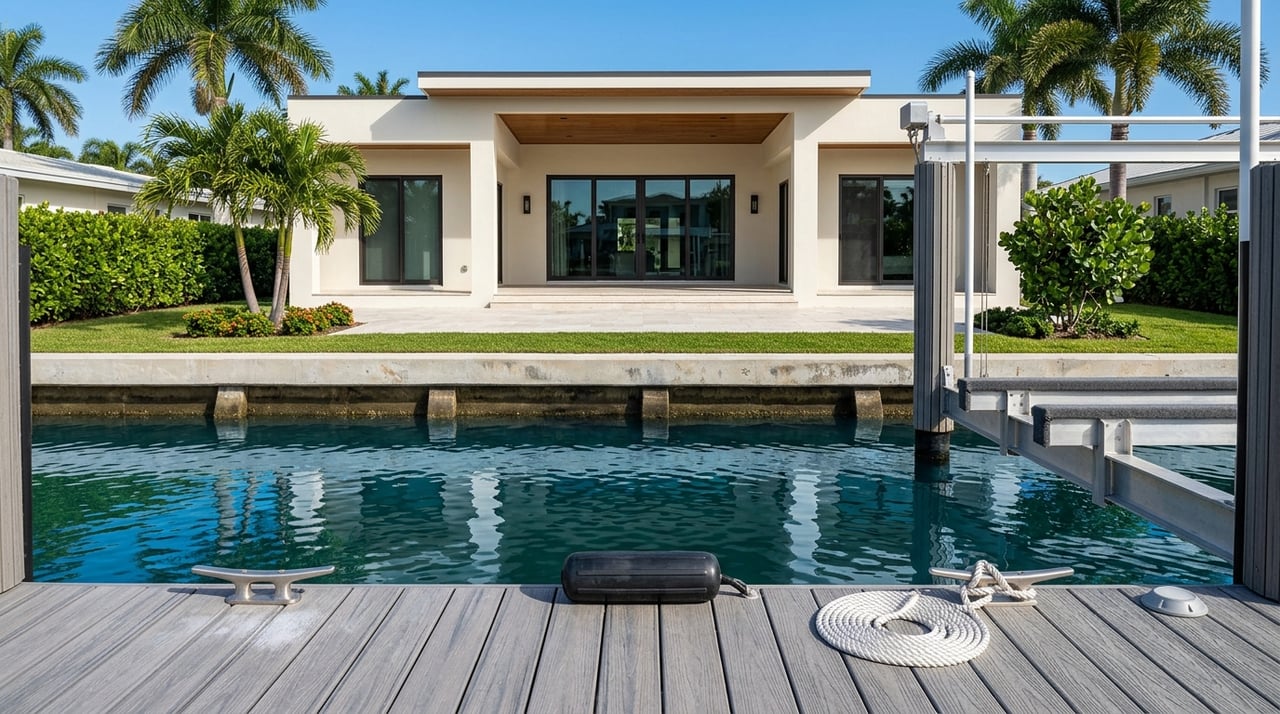
Looking for a Marco Island home for your boat? The view matters, but your boating route matters even more. If you want the right fit for your lifestyle, you need to think beyond “waterfront” and focus on bridge clearance, no-wake travel, dock setup, and how quickly you can reach open water. That is what turns a beautiful property into a truly boat-friendly one. Let’s dive in.
Start With Your Boat
Before you tour homes, start with the boat you already own or plan to keep on Marco Island. The right property depends on how your boat fits the island’s waterways, not just whether the home has water behind it.
Marco Island has more than 100 miles of waterways within just 24 square miles, and many routes to the Marco River or Gulf of Mexico pass under one, two, or even three bridges. That makes your boat’s height above the waterline a major factor in your home search.
The city’s bridge-clearance survey is approximate and measured at Mean High Water, so it should be used as guidance rather than a guarantee. Still, it gives you an important starting point when comparing homes and routes.
Why Route Matters on Marco Island
On Marco Island, not all waterfront homes offer the same boating experience. Two homes may both have docks, but the path from each dock to open water can feel very different day to day.
Some properties require travel through interior canals and bays with idle-speed no-wake rules. Others may offer a shorter, simpler route with fewer bottlenecks. If you enjoy quick access to open water, that difference can shape how often and how easily you use your boat.
A smart home search starts with one simple question: What is the exact route from the dock to the Marco River or the Gulf? Once you know that answer, the rest of the decision gets much clearer.
Canal Homes and Backyard Docking
Canal homes are a classic Marco Island choice for boat owners who want convenience at home. The city’s Waterways Committee describes the canal system as the main access system, allowing residents to keep boats in their backyards with canal access to the Gulf.
That setup can be ideal if you want to step outside, board your boat, and head out without relying on off-site storage or a marina slip. For many buyers, that daily ease is a major part of the appeal.
Canal Home Benefits
A canal-front property can offer several practical advantages:
- Private dock access from your backyard
- Easy loading for day trips and sunset cruises
- No need to drive to a marina before getting on the water
- A strong lifestyle connection between your home and your boat
For buyers who plan to boat often, this can be the most natural and enjoyable setup.
Canal Home Tradeoffs
The tradeoff is that canal routes can be very sensitive to bridge height and travel time. Marco Island’s bridge survey lists 14 bridges, and some interior crossings are especially low at Mean High Water.
Examples include North Collier Boulevard over Clam Bay at about 3 feet, Goldenrod Avenue over Goldenrod Waterway at about 3.07 feet, South Seas Court over Tidal Canal at about 3.44 feet, and Blackmore Drive over Clam Bay at about 3.49 feet. A home that works well for a lower-profile boat may not work for a taller vessel.
Canal homes also mean more time in idle-speed no-wake water. The city states that no-wake guidance applies in the island’s interior waterways, canals, and bays, so your trip may be slower than you expect if you focus only on the property and not the route.
Bayfront Homes and Easier Access
If you want fewer low-bridge concerns, bayfront homes are often worth a closer look. Based on the city’s bridge-clearance map, some larger waterways have higher clearances than the tighter interior canal crossings.
For example, Smokehouse Bay is listed at roughly 14.3 to 14.4 feet, while Factory Bay is about 9.3 feet. That can make a meaningful difference if your boat has more height above the waterline.
Bayfront homes often appeal to buyers who want a more direct path to open water and fewer route restrictions. The exact path still matters, but these properties can reduce some of the friction that comes with interior canal boating.
Near-Marina Homes for Flexible Boating
A private dock is not the only way to enjoy boating on Marco Island. For some buyers, a home near marina services offers the right balance of convenience, flexibility, and reduced maintenance.
Rose Marina offers deep water and direct access to the Gulf of Mexico and local waterways, along with transient and long-term dockage, fuel, pump-out, power, Wi-Fi, and boat-lift options. Collier County notes that Caxambas Park provides public boat access with easy access to the Northern Ten Thousand Islands or the Gulf of Mexico.
This option can make sense if you do not want the responsibility of maintaining a private dock, lift, or seawall. It can also work well if service support and slip access matter more to you than keeping the boat directly behind the house.
When Marina Access May Be Enough
You may prefer a near-marina property if you want:
- Slip access instead of a private dock
- Fuel and pump-out nearby
- Less responsibility for marine structure upkeep
- A boating setup that feels simpler and more flexible
The city also lists pump-out facilities at Rose Marina, Esplanade Marina, Caxambas Park Marina, and Calusa Island Marina. If you expect frequent outings or longer days on the water, those services can be a helpful part of your decision.
Check the Dock, Lift, and Seawall
A boat-friendly home is about more than location. You also want to know whether the property’s marine improvements are in good condition and properly documented.
The City of Marco Island’s seawall permit application states that separate permits are required for dock, lift, electric, and plumbing work. The application process also calls for scaled site plans, a survey or plat map, and engineer-sealed plans for seawall work.
That means buyers should ask careful questions about the existing dock, lift, and seawall. If improvements were added years ago, you want to know whether they were permitted properly and whether there are signs of deferred maintenance.
Why Future Plans Matter Too
If you hope to upgrade or expand a dock after closing, do not assume every lot can support every idea. Florida DEP guidance notes that some single-family docks may fall under exempt or general-permit pathways, while larger or more complex projects may require an individual Environmental Resource Permit.
Its general-permit example covers a private dock up to 2,000 square feet designed for no more than two vessels. The practical takeaway is simple: your future dock plans may affect which property is truly the right fit.
Questions to Ask Before Touring
When you are narrowing your options, it helps to keep a short list of boating questions in mind. These questions can quickly reveal whether a property supports the way you actually want to use the water.
Ask about:
- The exact route from the dock to the Marco River or Gulf
- How many bridges are on that route
- The lowest bridge clearance along the way
- Your boat’s height above the waterline
- Whether the property has a permitted dock, lift, and seawall
- Whether you are comfortable with no-wake travel inside the island
- Whether marina slip access could work instead of a private dock
These details may sound small during an online search, but they often decide whether a home feels effortless or frustrating once you move in.
Match the Home to Your Boating Lifestyle
The best Marco Island home for your boat is not always the home with the widest canal view or the most dramatic waterfront setting. It is the home that fits the way you use your boat, how often you go out, and how much upkeep you want to manage.
If backyard access is your top priority, a canal home may be the right choice. If you want fewer bridge bottlenecks, a bayfront property may deserve more attention. If you value service and flexibility, a near-marina home may be the smarter match.
That is why buying a boating property on Marco Island is really a route decision as much as a real estate decision. When you evaluate the home, the water access, and the marine features together, you can buy with much more confidence.
If you are comparing canal, bayfront, or marina-adjacent options on Marco Island, working with a local advisor who understands the boating side of the search can make the process much smoother. For tailored guidance on finding the right waterfront fit, connect with Susan Barreiro.
FAQs
What should I check first when buying a Marco Island home for a boat?
- Start with your boat’s height above the waterline, then compare it to the route from the property to open water, including bridge clearances and no-wake areas.
Are all Marco Island canal homes good for every type of boat?
- No. Some canal routes include very low bridges, so a canal home may work well for one boat and not for another.
Are bayfront homes on Marco Island better for taller boats?
- They often can be, because some larger waterways have higher bridge clearances than interior canal routes, though the exact route still needs to be checked.
Do I need to review permits for a Marco Island dock or seawall?
- Yes. The city requires separate permits for dock, lift, electric, and plumbing work, so it is important to verify existing improvements and their status.
Can a near-marina home work if I do not want a private dock?
- Yes. For some buyers, marina access offers a practical alternative with dockage, fuel, pump-out, and other boating services nearby.
Do Marco Island interior waterways have no-wake rules?
- Yes. The city states that idle-speed no-wake guidance applies in the island’s interior waterways, canals, and bays.